
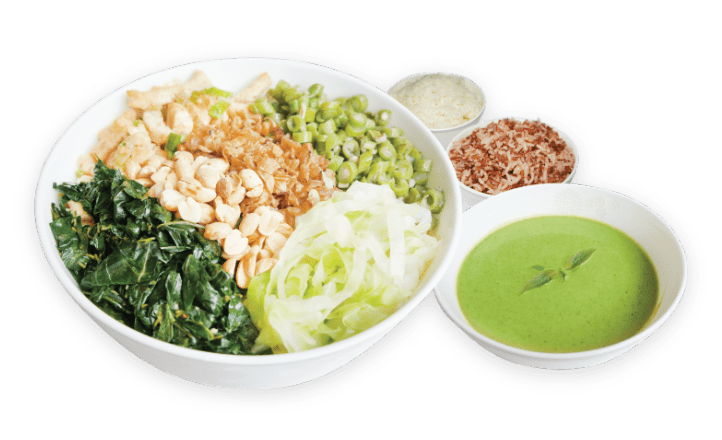
Lei Cha is a Hakka dish whose name is commonly translated as “thunder tea rice”. Despite the dramatic name, the experience is comforting: rice and finely prepared toppings served with a fragrant green herb soup.
Why is it called thunder tea?
The “thunder” refers to the traditional pounding or grinding involved in preparing the tea mixture. Herbs, tea leaves and other ingredients are worked into an aromatic base before hot water turns it into the soup served beside the bowl.
There is no single universal recipe. Families and stalls make different choices, which means colour, bitterness, nuttiness and herb intensity can vary.
What is usually in the bowl?
A typical bowl brings rice together with a variety of chopped vegetables, tofu or preserved radish, plus crunchy elements such as peanuts or seeds. The exact vegetables change with recipe and availability.
The soup is the signature element. It may contain tea leaves and herbs such as basil or mint, producing a flavour that can feel grassy, savoury, nutty and refreshing at once. Ask the stall about ingredients if you have allergies.
How do you eat Lei Cha?
- Taste the herb soup on its own first
- Pour a little over the rice and mix the toppings
- Add more soup until the intensity suits you
- Enjoy alternating textures rather than searching for one “correct” method
Your first bowl in Singapore
For first-timers, treat Lei Cha as both a meal and an introduction to a distinctive food tradition. Expect fresh textures and an aromatic soup rather than the richness of a curry or fried noodle dish.
At Lin Da Ma, our bowl is designed to be approachable while retaining its unmistakable herbal character. Visit us at Amoy Street or Holland Drive, or plan a bulk lunch for your office.
This guide provides general food information, not medical advice. Singapore healthy-eating references include HealthHub’s My Healthy Plate resources. Hawker-culture context is based on UNESCO’s official inscription.