
Eating well in Singapore does not mean giving up hawker food. The useful question is not whether a dish carries a “healthy” label, but how its vegetables, grains, protein, preparation and portion work together.
Start with the quarter-quarter-half idea
Singapore’s Health Promotion Board presents My Healthy Plate as a simple visual guide: roughly half a plate of fruit and vegetables, one quarter wholegrains and one quarter protein. It is a planning tool rather than a rule for judging any single dish.
At a hawker centre, translate that idea into practical requests: choose a vegetable-forward dish, ask whether brown rice is available, add tofu, egg or lean meat when you need more protein, and make water or an unsweetened drink the default.
What to look for at a hawker centre
- Visible variety of vegetables rather than a token garnish
- A portion of rice or noodles that suits your appetite
- Tofu, beans, egg, fish or lean meat for protein
- Soup and sauces you can add gradually
- Freshly prepared food you genuinely enjoy eating
Where Lei Cha fits
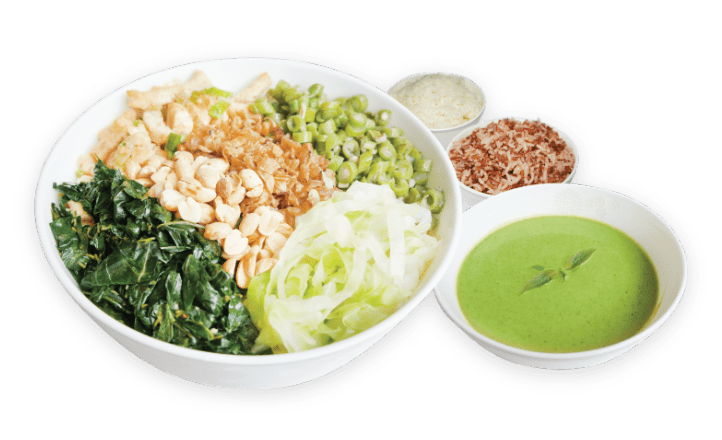
Lei Cha, also called thunder tea rice, is a Hakka-style meal built around rice, chopped vegetables, tofu and toppings, served with an aromatic herb-based tea soup. Recipes differ between stalls, so ingredients and seasoning are never identical.
Its appeal is variety: contrasting greens, grains, tofu, nuts or seeds can share one bowl. At Lin Da Ma, you can pour the soup into the rice or enjoy it separately, then choose the combination that suits you.
Healthy should still be satisfying
A lunch that leaves you hungry may lead to unplanned snacking later. Balance matters: vegetables add variety, while grains and protein make the meal feel complete. Choose portions for your own activity level and dietary needs.
For personalised medical or nutrition advice, speak with a qualified dietitian. For an everyday lunch, aim for variety, sensible portions and food you will happily return to.
This guide provides general food information, not medical advice. Singapore healthy-eating references include HealthHub’s My Healthy Plate resources. Hawker-culture context is based on UNESCO’s official inscription.